
Garage Floor Epoxy in Orlando — Engineered for Central Florida Garages
From a Lake Nona new-build to a 1980s Conway ranch, an Orlando garage bakes in the I-4 corridor sun and sits over sandy Central Florida soil that wicks moisture straight up the slab. We read that slab before we coat it, then lay a flake or metallic system that laughs off hot tires and oil. In and out in 1–2 days.
Want to talk to the installer? During business hours we can put you through on the same call.
- 25-year transferable warranty
- Most jobs quoted the same day
- No trip fees
- Real color samples at your free estimate
- Military & police discount
What a Central Florida Garage Does to a Bare Slab
Orlando is a region built on garages. The metro has been one of the fastest-growing in the country for two decades, and the master-planned communities ringing the theme parks — Lake Nona, Horizon West, Winter Garden, Avalon Park — pour thousands of attached two- and three-car slabs every year. Almost none of them get finished. The builder hands over raw, broom-swept concrete and moves to the next lot. That slab then has to survive a climate few other states throw at a garage floor.
Start with the ground itself. Much of Central Florida sits on sandy, fast-draining soil over a shallow water table, so a slab-on-grade pour acts like a wick: ground moisture rises through the concrete as vapor day and night. Add summer afternoons where the slab can soak radiant heat well past pavement temperatures, and the daily monsoon-season downpours that drive humidity up near saturation, and you have the exact conditions that make a cheap roll-on garage kit bubble, blush, and peel inside a single rainy season. Trapped slab moisture is the number-one reason garage coatings fail here — not the epoxy, the prep.
That is the whole reason our process leads with a moisture reading instead of a paint can. We meter every slab, and when vapor transmission runs high we set a moisture-mitigating primer before anything decorative goes down. On top of that goes a seamless, non-porous build that shrugs off oil, brake dust, and gas drips and wipes clean with a mop — the same coating chemistry that protects the kitchens, lanais, and living spaces we finish across Orlando, tuned here for a floor that parks hot tires.
We coat garages right across Greater Orlando — the established neighborhoods of Winter Park and the tourist-corridor sprawl of Kissimmee, plus the booming bedroom suburbs of Sanford, Lake Mary, and Ocoee. Compare finishes in our commercial epoxy line, or price your project with the Orlando cost guide.
 Before
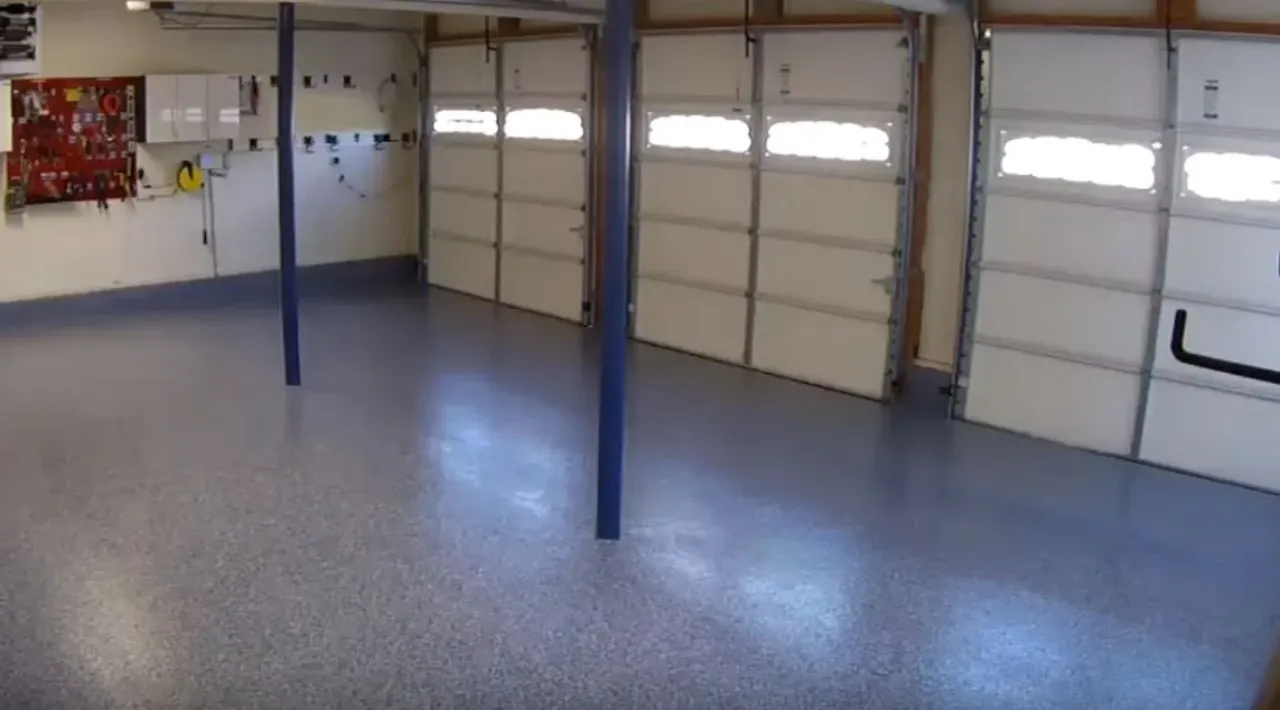 After
After
From Bare Slab to Finished Floor
Five steps, two days on site, and a moisture reading on day one — because in Central Florida the prep is what decides whether the coating lasts.
On-Site Walkthrough
~45 minThe team comes to your garage — whether that's a Lake Mary three-car or a downtown bungalow's single bay — measures the bays, checks how the slab has aged, and walks you through flake and metallic options in real samples. You leave with a written quote, not a ballpark. Book the walkthrough free.

Grind & Moisture-Test
2–4 hrsDiamond grinding cuts open the top of the slab so the coating can mechanically lock in — no acid-etch shortcuts. Then we meter it: calcium-chloride and in-situ relative-humidity testing to catch the vapor drive that comes up through Central Florida's sandy subgrade. This step is the difference between a floor that lasts and one that blisters by August.

Repair, Then Vapor-Prime
30–60 minSettlement cracks, spalls, and control joints get filled flush with semi-flexible polyurea so they don't telegraph back through the finish. If the moisture reading came in high, this is where a vapor-barrier primer goes down first — the insurance an Orlando slab usually needs before any color.

Build the Flake or Metallic System
3–5 hrsNext comes the look you picked — a high-solids base broadcast with decorative color flake, or a poured metallic finish with that deep, swirling shine. Either way it's sealed under a UV-stable polyaspartic topcoat so the sun off the slab won't yellow it and hot tires won't lift it.

Cure & Hand Over
5–7 daysWalk on it in 24 hours; park on it after a full 5-to-7-day cure (we plan that cure window around the daily storm forecast, not against it). You get care instructions and your written warranty in hand before we leave.

The Walkthrough Is Free. So Is the Quote.
Pick a time, see flake and metallic samples in your own garage, and get a written number the same visit.
Six Things a Coated Garage Floor Gives an Orlando Home
Built for the way Central Florida garages actually get used — hot tires, summer storms, and a slab that doubles as a workshop because nobody here has a basement.
200°F
Hot Tire Resistant (200°F+)
Pull off I-4 or the 408 on an August afternoon and your tires come home superheated. Cheap coatings soften and lift where the rubber sits — "hot-tire pickup." Our polyaspartic topcoat stays bonded past 200°F, so daily commuters and theme-park-traffic crawls leave no marks.
Why Central Florida heat and humidity matters →Non-porous
Spills Wipe Up, Not In
Oil, transmission fluid, pool chemicals, lawn-equipment gas — the stuff that piles up in a Florida garage-turned-storage-shed. On bare concrete it soaks in and stains for good. The sealed epoxy surface holds it on top so a paper towel handles it.
Anti-slip
Grip That Survives Storm Season
Central Florida gets a near-daily thunderstorm all summer, and a wet car drips a puddle the second it rolls in. Broadcast flake plus an anti-slip additive give the topcoat real traction, so the floor stays sure-footed even when you're tracking in a downpour.
10–30 yrs
Built to Last a Decade-Plus
The big-box garage kit that fails by the next rainy season is exactly what we're not. Diamond-ground prep plus a polyaspartic topcoat is what lets an Orlando floor run 10 years easily and often 20 to 30 before a recoat — through every summer the slab has to take.
How humidity affects durability →Sweep & mop
No Re-Sealing, Ever
A seamless coat means no grout lines or open pores for love-bug residue, yard sand, or palm pollen to settle into. Sweep it, hose-mop it, done — and unlike a bare slab there's nothing to re-seal as the years pass.
Buyer-ready
Shows Well in a Fast Market
Orlando's housing turns over quickly with new arrivals chasing jobs near the parks and the Medical City corridor. A finished, showroom-clean garage photographs well and reads as "well-kept" the moment a buyer walks the home.
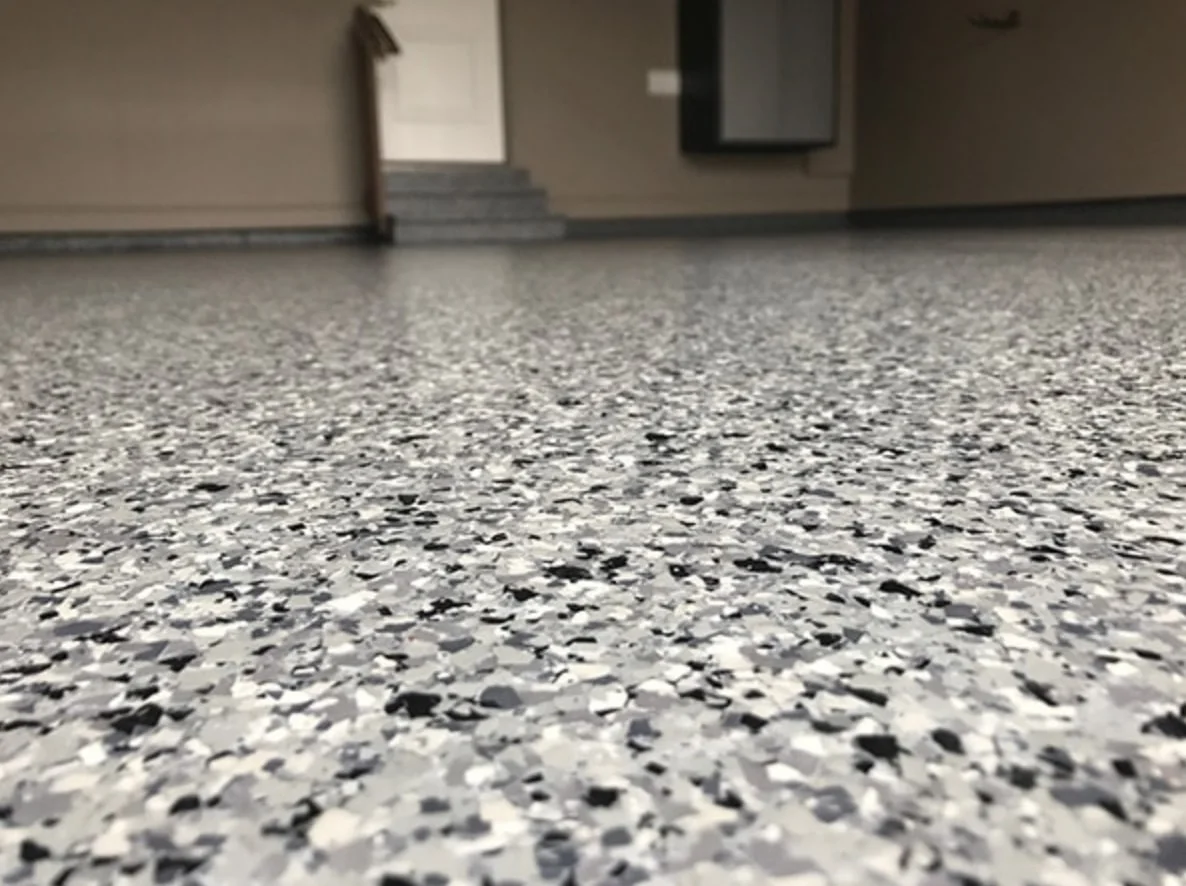
Read the Orlando cost guide →Orlando Garages, Before & After
Garage floors like the ones we finish across the metro — from new-build suburbs to older in-town homes.

Rated 4.9★ — Ascent Epoxy Network
Real reviews from homeowners across the Ascent Epoxy network.
"We had Epoxy Orlando redo our garage floor this summer and it totally changed the space. The installers were on time, polite, and really knew their stuff. I picked a metallic finish and it looks amazing when the light hits it. No peeling or dull spots even after all the rain and humidity. Would absolutely use them again."
"Got my garage done last month. The epoxy came out perfect and the color chips hide dirt really well. Team finished quicker than expected."
"Great job from start to finish. Crew was fast, clean, and super respectful of the property. My shop floor looks incredible."
Garage Epoxy FAQs — Orlando
The questions Central Florida homeowners ask us most about coating a garage floor — cost, climate, cure time, and timing.
Every Orlando garage floor is priced after a free on-site measurement, because the price depends on the size of the garage, the condition of the slab (cracks, old coatings, moisture), the coating system you choose (solid color, decorative flake, or metallic), and the prep the concrete needs. Call (407) 783-8654 or request a free estimate for an exact written price, with no obligation. Our Orlando cost guide explains each factor.
Orlando's average 75-90% relative humidity makes moisture testing and proper surface preparation critical for a lasting garage epoxy floor. Excess moisture trapped in the concrete slab can cause epoxy coatings to bubble, peel, or delaminate within months of installation. Professional installers use calcium chloride testing and in-situ relative humidity probes to verify that slab moisture levels are within acceptable ranges before applying any coating. When moisture levels are elevated, a moisture-mitigating primer is applied first to create a vapor barrier between the slab and the epoxy system.
Garage epoxy floors in Florida last 10 to 30 years when installed with proper surface preparation and moisture testing. The wide range depends on the coating system used, the quality of prep work, and how the garage is used. High-solids epoxy base coats paired with polyaspartic topcoats deliver the longest service life because they resist UV yellowing, hot-tire pickup, and chemical exposure better than entry-level systems.
Yes, you can park on your new epoxy garage floor after a 5 to 7 day full cure period. Light foot traffic is typically safe within 24 hours of the final coat, and you can place objects on the surface after 48 to 72 hours. Our professional-grade epoxy and polyaspartic topcoats are specifically formulated to resist hot-tire pickup, so you will not see marks or peeling from parking warm vehicles on the surface.
October through April is the best time to epoxy a garage floor in Orlando. Lower humidity and cooler temperatures during these months create ideal conditions for epoxy adhesion and curing. Concrete surface temperatures between 50°F and 90°F are optimal for most epoxy systems. Summer installations are still possible but require additional climate control measures, such as dehumidifiers and fans, to manage moisture and heat during the application and cure stages.
Mock up your garage floor in 60 seconds.
Set your bay count, choose flake or metallic, and dial in the color. You'll see a live preview and a Central Florida price range before you ever pick up the phone.
Open Floor Studio →